Why High-Density EVA Matters: Compression Set, Durability, and Tactile Feedback in Training Aids
A materials-informed look at EVA foam: how it behaves under repeated load, why density matters for shape retention, and what ‘tactile feedback’ really means for lifting practice.
Key takeaways
- Focus on repeatable contact points first: feet, glutes, upper back, grip, breath/brace.
- Use one or two cues at a time—too many internal cues can reduce output under load.
- Choose technique variables (arch, grip width, bar path) based on goals, rules, and comfort—then standardize them.
- Stability improves force transfer; small setup changes can produce big performance changes over time.
- EZBack Pro is a performance training aid, not a medical device.
What EVA is (and why gyms use it)
EVA—ethylene-vinyl acetate—is a copolymer used across footwear, sports padding, and protective equipment because it can be light, resilient, and relatively durable. In the gym world, EVA shows up in mats, pads, shoes, and grips because it can provide a balance of cushioning and firmness.
But not all EVA behaves the same. Density, foam structure (open vs closed cells), and formulation influence whether a pad stays ‘springy’ or turns into a pancake over time. For training aids that rely on consistent shape and tactile contact, those details matter.
If your goal is posture cueing or repeatable contact points, you don’t want a pad that deforms unpredictably. You want firm, consistent feedback session after session. That’s why high-density EVA is commonly used where shape retention is a priority (Wang & Li, 2012).
In simple terms: EVA can be tuned from soft and plush to firm and structural. For posture cueing, firm and structural is usually the point.
Compression set and shape retention
‘Compression set’ is the tendency of a foam to permanently deform after being compressed for time. In plain English: you press it, it doesn’t fully rebound, and over many cycles it gets thinner or changes shape.
For lifting tools, compression set matters because it changes the exact contact point you feel. If the foam slowly collapses, your tactile reference drifts—and your technique cues drift with it. Research on polymer foams shows that microstructure and density influence compressive behavior and long-term mechanical performance (Wang & Li, 2012; Lippa et al., 2017).
High-density EVA generally resists bottoming-out better than low-density foam. That doesn’t mean it’s ‘indestructible,’ but it tends to hold shape longer under repeated loading. In a training context, that translates to more consistent feedback over time.
- What you feel: firm contact that doesn’t disappear when the load gets heavy.
- What you avoid: a pad that starts thick and supportive but gradually turns mushy and changes your setup.
- Why it matters: consistency is the foundation of motor learning and strength progression.
In materials testing, compression set and cyclic compression are commonly evaluated with standardized methods so manufacturers can compare formulations. While many standards focus on urethane foams, the principle carries over: if the foam is repeatedly compressed, its ability to return to its original thickness is a key indicator of long-term performance (ASTM International, 2021). For a training aid, you want the geometry to stay stable so the cue stays stable.
Tactile feedback and motor learning
A pad’s job isn’t just cushioning. In technique training, the pad becomes a communication channel: it tells you where you are in space. That’s tactile feedback.
Motor learning research suggests that feedback can improve learning when it is clear, timely, and not overwhelming. A systematic review on tactile feedback shows it can be effective in shaping movement and performance in certain tasks (van Breda et al., 2017). In strength training, the practical translation is simple: one consistent reference point can be more useful than a dozen verbal cues.
This also fits with broader findings that an external focus of attention often improves performance and learning compared with an internal focus (Wulf, 2013). A tactile reference can function like an external cue: instead of thinking ‘move my scapulae,’ you feel ‘stay connected here’ and let the body organize the movement.
That’s why firmness matters. If the foam is too soft, the cue becomes vague. If it is firm and stable, the cue becomes repeatable and easy to interpret.
Care, cleaning, and lifespan
EVA is used in sweaty environments for a reason: it can be wiped down and maintained easily. But the details matter. Oils, harsh solvents, and extreme heat can accelerate breakdown.
To extend lifespan: wipe after sessions with standard gym disinfectant wipes, avoid leaving it in a hot car for long periods, and store it flat so it isn’t compressed in a weird shape. If you rely on tactile contact points, you’re trying to preserve geometry, not just cleanliness.
If you ever notice that the pad has developed a permanent dent or has become noticeably softer, treat it like worn shoes: it may still function, but the feedback will be less precise.
Heat and long-term compression are the usual killers. If you store a foam tool under heavy objects, you’re essentially performing a long-duration compression test. Store it where it can recover—exactly like you’d store a lifting belt without folding it into a permanent crease.
What to look for in foam gear
When buying foam training gear, ask these questions:
- Is it firm enough to cue position? Plush foam feels nice but can hide shifts in posture.
- Does it rebound after pressure? Press hard with your thumb—does it spring back or stay dented?
- Is the surface closed-cell and wipeable? Open-cell foams absorb sweat and degrade faster.
- Will it stay stable under load? Slipping and shifting are stability killers.
- Is the shape designed for a specific contact point? Generic pads are often too flat and inconsistent.
How this relates to EZBack Pro
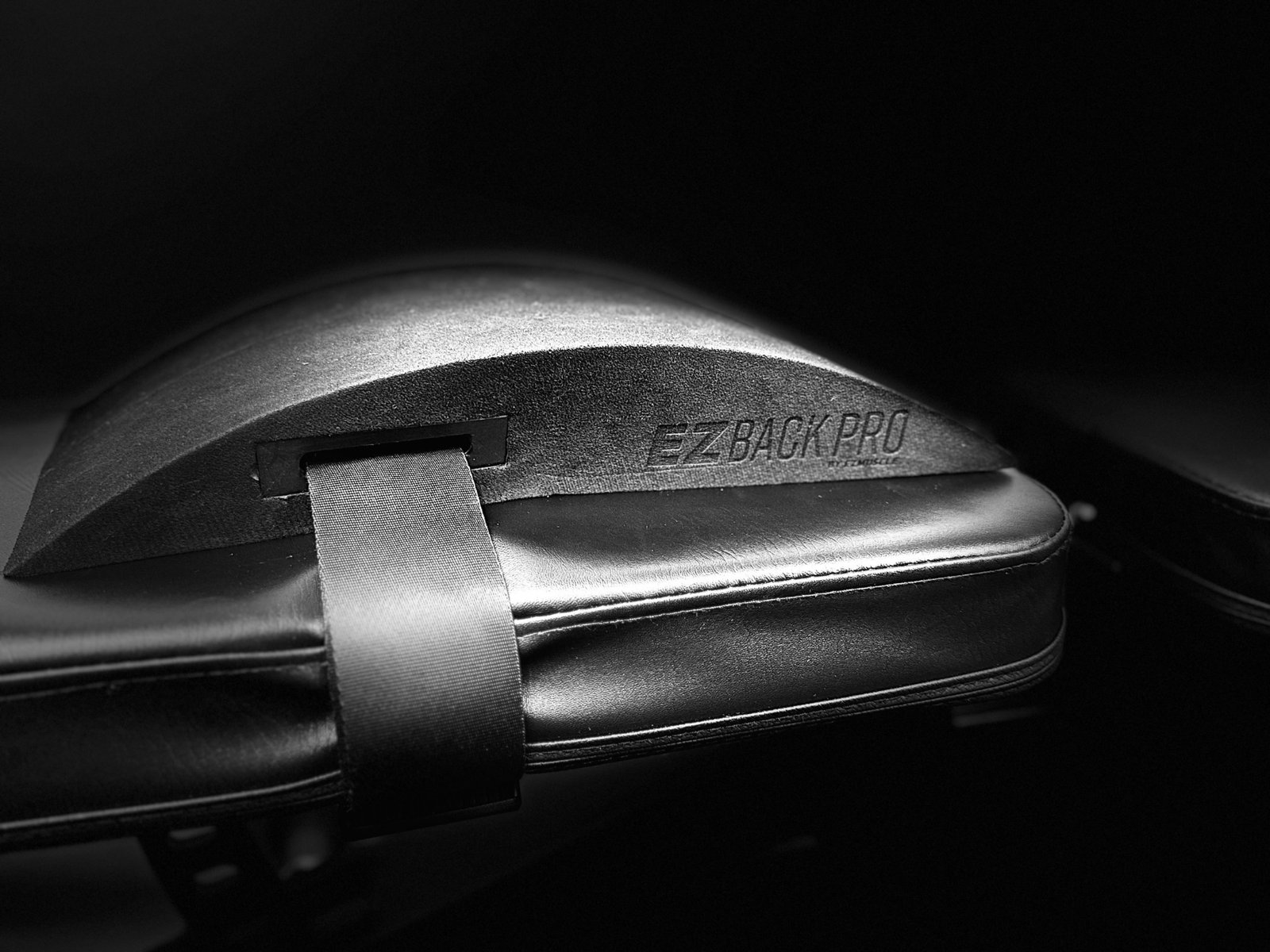
EZBack Pro is designed as a tactile training aid: it’s meant to provide a firm, repeatable contact reference so you can standardize your setup. That only works if the material holds its shape and doesn’t compress unpredictably.
That’s the real reason ‘high-density EVA’ is valuable here: not for comfort, but for consistency. Consistency is what allows practice to accumulate.
Use it the same way you use consistent grip width or consistent foot placement: lock it in, repeat it, and let your progress come from measurable overload, not from constantly changing inputs.
Want the simplest setup?
Start with the EZBack Pro guide on the home page and the product overview, then apply the technique steps in this article on your next session.
Local searches & geo pages
If you found EZBack Pro via local search, our Locations pages help search engines connect your region to the product and support resources.
References
APA-style references used to cross-check key claims.
- Gibson, L. J., & Ashby, M. F. (1997). Cellular solids: Structure and properties (2nd ed.). Cambridge University Press.
- ASTM International. (2021). ASTM D3574-21: Standard test methods for flexible cellular materials—slab, bonded, and molded urethane foams. ASTM International.
- van Breda, E., Verwulgen, S., Saeys, W., & Truijen, S. (2017). The effectiveness of tactile feedback in motor learning: A systematic review. PLOS ONE, 12(12), e0189253. https://doi.org/10.1371/journal.pone.0189253
- Wulf, G. (2013). Attentional focus and motor learning: A review of 15 years. International Review of Sport and Exercise Psychology, 6(1), 77–104. https://doi.org/10.1080/1750984X.2012.723728
- American College of Sports Medicine. (2009). American College of Sports Medicine position stand: Progression models in resistance training for healthy adults. Medicine & Science in Sports & Exercise, 41(3), 687–708. https://doi.org/10.1249/MSS.0b013e3181915670